Have you ever typed “trama” when you meant “trauma” or wondered whether trama is actually a real word? You’re not alone. These two words look remarkably similar, but they have very different meanings depending on the language and context.
If you’re searching for trama vs trauma, the short answer is that trauma is the correct English word for a physical or emotional injury, while trama is generally not an English word. However, trama does exist in several other languages, especially Spanish and Italian, where it has completely different meanings. In this guide, you’ll learn the trama definition, discover what does trama mean, understand the correct spelling, and avoid a common language mistake.
The Short Answer
Here’s the simple explanation:
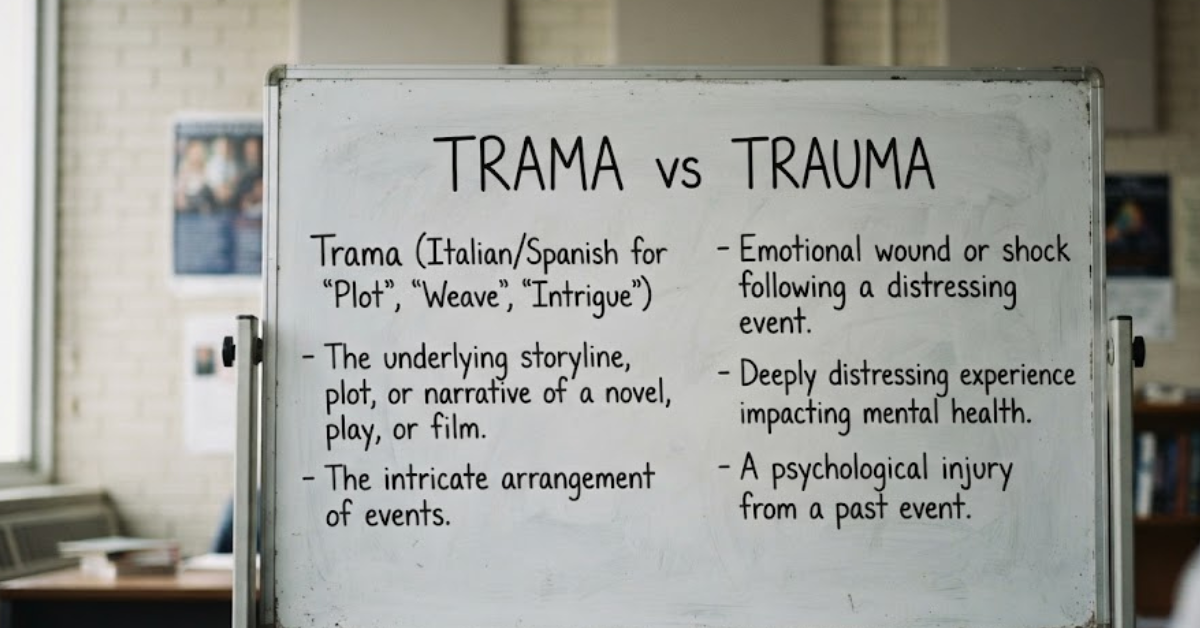
- Trauma A correct English word referring to physical or psychological injury.
- Trama A real word in languages such as Spanish and Italian, but not with the same meaning as trauma.
- Trama Usually a misspelling of trauma when writing in English.
The intended meaning depends entirely on the language you’re using.
What Is Trauma?
In English, trauma refers to serious physical or emotional harm caused by a distressing event.
The word is widely used in:
- Medicine
- Psychology
- Counseling
- Emergency healthcare
- Everyday conversation
Examples
- She experienced emotional trauma after the accident.
- The patient suffered severe head trauma.
- Childhood trauma can affect mental health later in life.
- He is receiving therapy to recover from psychological trauma.
In all of these examples, trauma describes injury or emotional distress.
What Is Trama?
Many people ask what is trama because they encounter the word online or hear it spoken.
In English, trama is generally not considered a standard word.
However, in several other languages it has legitimate meanings.
Trama Definition in Spanish
In Spanish, trama commonly means:
- Plot (of a novel, movie, or television show)
- Storyline
- Narrative structure
- Weave or fabric structure (in textile contexts)
Examples
- La trama de la película fue emocionante.
- The movie’s plot was exciting.
- La trama del libro es muy interesante.
- The book’s storyline is very interesting.
Here, trama has nothing to do with injury or emotional suffering.
Trama in Italian
In Italian, trama also commonly means:
- Plot
- Storyline
- Fabric weave
- Structure
Again, the meaning relates to stories or textiles rather than medical conditions.
Trama vs Trauma: Side-by-Side Comparison
| Trama | Trauma |
| Spanish and Italian word | English word |
| Means plot or storyline | Means physical or emotional injury |
| Not standard English | Common English vocabulary |
| Used in literature and textiles | Used in medicine and psychology |
Although they differ by only one letter, the meanings are entirely unrelated.
Why Do People Confuse Trama and Trauma?
Several factors contribute to the confusion.
1. Similar Spelling
Only one letter separates the two words, making typing errors common.
2. Pronunciation
Depending on someone’s accent or native language, trama and trauma may sound similar.
3. Language Differences
Bilingual speakers often switch between English and Spanish or Italian, where trama is perfectly correct.
This can lead to accidental spelling mistakes when writing in English.
How to Spell Trama Correctly
One common search is how to spell trama.
The answer depends on your language.
If You’re Writing in English
If you mean emotional or physical injury:
Trauma
If you accidentally write:
Trama
it’s almost certainly a spelling mistake.
If You’re Writing in Spanish
Then trama is the correct spelling when referring to:
- A story’s plot
- A narrative
- A textile weave
Common Examples
Let’s compare the two words.
Correct English
She experienced trauma after the accident.
Incorrect English
She experienced trama after the accident.
Correct Spanish
La trama de la novela es fascinante.
Translation:
The novel’s plot is fascinating.
Correct English Translation
Notice that trama becomes plot, not trauma.
Common Mistakes to Avoid
Here are some frequent errors.
Mistake 1
Using trama when discussing mental health.
Incorrect:
Childhood trama can affect adults.
Correct:
Childhood trauma can affect adults.
Mistake 2
Assuming trama is an English synonym for trauma.
It isn’t.
The words have different origins and meanings.
Mistake 3
Automatically translating trama as trauma.
In Spanish literature, trama usually translates as plot or storyline.
Practical Tips to Remember the Difference
Here are a few easy memory tricks.
Trauma = Injury
If you’re discussing:
- Accidents
- Mental health
- Medical treatment
- Emotional experiences
Use trauma.
Trama = Story
If you’re reading Spanish or Italian and someone mentions a novel or movie, trama almost certainly refers to the plot.
Think of the Context
Ask yourself:
- Is the topic medicine or psychology?
- Use trauma.
- Is the topic literature or storytelling in Spanish?
- Trama may be correct.
Why Context Is So Important
Many words change meaning across languages.
For example:
- Embarazada (Spanish) doesn’t mean embarrassed—it means pregnant.
- Actual (Spanish) often means current, not actual.
- Trama doesn’t mean trauma.
These “false friends” are common when learning multiple languages.
Understanding context helps avoid embarrassing translation mistakes.
Key Takeaways
- Trauma is the correct English word for physical or emotional injury.
- Trama is a legitimate word in Spanish and Italian, usually meaning plot or storyline.
- Trama is not the English spelling of trauma.
- Always consider the language and context before choosing the correct word.
- Similar spellings don’t necessarily indicate similar meanings.
Frequently Asked Questions
What is trama?
In English, trama is generally not a standard word. In Spanish and Italian, it commonly means the plot or storyline of a book, movie, or play.
What does trama mean?
The meaning of trama depends on the language. In Spanish, it usually refers to a narrative plot or the weave of a fabric, while in English it is often a misspelling of trauma.
Is trama the same as trauma?
No. Trauma refers to physical or psychological injury in English, whereas trama has different meanings in languages like Spanish and Italian.
How do you spell trauma correctly?
The correct English spelling is trauma. If you’re referring to emotional distress or physical injury, trama is incorrect.
Why do people confuse trama and trauma?
The words are visually similar, and bilingual speakers may accidentally mix languages. Their meanings, however, are entirely different.
Can I use trama in English?
Only when discussing foreign-language terms, literature, or translations. Otherwise, standard English requires trauma or another appropriate English word.
Conclusion
Understanding trama vs trauma is easier once you recognize that the two words belong to different linguistic contexts. Trauma is the standard English term for physical or emotional injury and is widely used in medicine, psychology, and everyday conversation. Trama, on the other hand, is a valid word in languages such as Spanish and Italian, where it most often refers to the plot of a story or the weave of a fabric.
Whenever you’re writing in English about injury, mental health, or emotional experiences, trauma is the correct choice. If you encounter trama in a Spanish novel or film review, remember that it almost certainly refers to the storyline rather than a medical condition. Understanding this distinction will help you communicate more accurately, avoid translation mistakes, and build greater confidence in both English and multilingual contexts.