
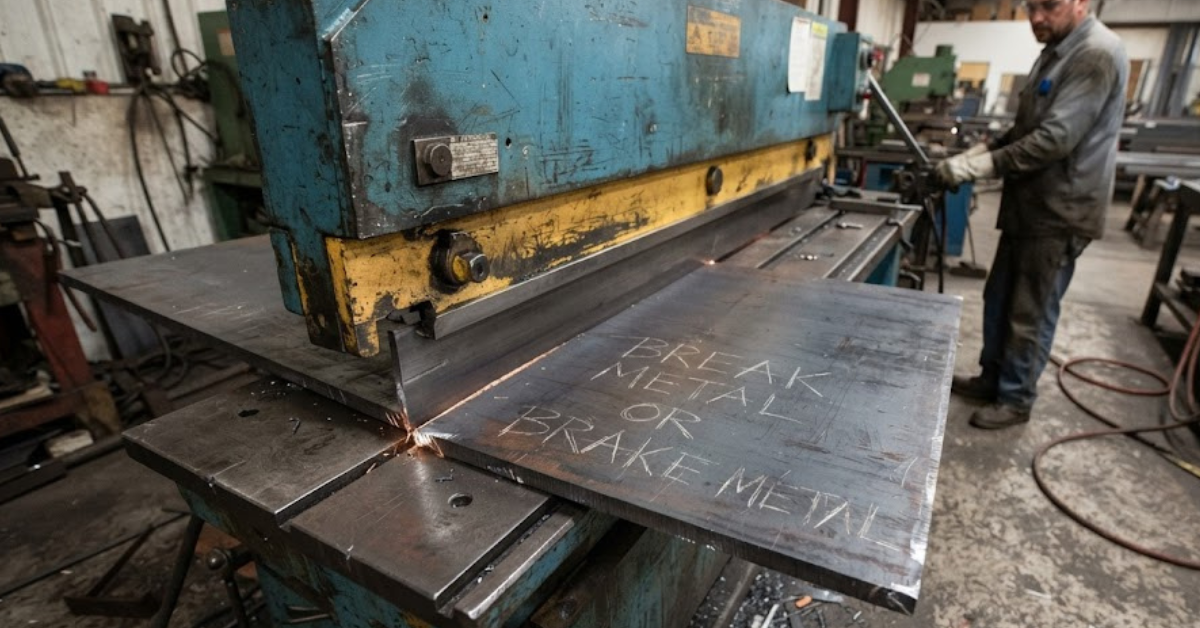
If you’ve searched for break metal or brake metal, you’ve probably come across conflicting information. Some websites use “break metal,” while others refer to “brake metal” or even “breakmetal.” So, which one is actually correct?
The answer depends entirely on the context. In most cases, “brake metal” relates to vehicle braking systems, while “break metal” usually refers to the act of breaking or fracturing metal—not a specific technical term. This guide explains the difference, clears up common spelling mistakes, and explores how these terms are used in automotive, manufacturing, and metalworking industries.
Break Metal or Brake Metal: What’s the Difference?
Although the words break and brake sound identical, they have completely different meanings.
- Break is a verb meaning to crack, fracture, separate, or damage something.
- Brake is a noun or verb related to slowing or stopping a moving vehicle or machine.
Because they are homophones (words that sound alike), they’re frequently confused in writing.
Quick Comparison
| Term | Meaning | Correct Usage |
| Break metal | To fracture or split metal | Descriptive phrase |
| Brake metal | Metal used in brake components | Automotive context |
| Breakmetal | Usually a misspelling or merged form | Not standard English |
Understanding this distinction prevents confusion, especially in technical discussions.
What Is Brake Metal?
If you’re wondering what is brake metal, the phrase generally refers to the metallic materials used in a vehicle’s braking system.
These materials may include:
- Brake discs (rotors)
- Brake drums
- Brake pads containing metallic compounds
- Brake shoes
- Steel backing plates
In automotive engineering, these components are designed to withstand high temperatures, friction, and repeated stress during braking.
Common Metals Used in Brake Systems
Modern braking systems use several types of metals depending on the vehicle and application.
Cast Iron
Most brake rotors are made from cast iron because it:
- Dissipates heat effectively
- Offers durability
- Is relatively affordable
Steel
Steel is commonly used for:
- Brake backing plates
- Hardware
- Mounting components
Stainless Steel
Often found in:
- Brake lines
- Performance applications
- Corrosion-resistant parts
Copper and Metal Alloys
Some brake pad formulations include metallic fibers that improve:
- Heat transfer
- Braking performance
- Durability
What Does “Break Metal” Mean?
Unlike “brake metal,” break metal is not a standardized technical term.
Instead, it simply describes the action of breaking metal.
For example:
- Breaking a steel rod
- Fracturing an aluminum sheet
- Snapping a metal bracket
- Cracking a cast iron component
In manufacturing or engineering, professionals are more likely to use terms such as:
- Metal fracture
- Metal failure
- Metal cracking
- Structural failure
So while “break metal” is grammatically correct in a sentence, it isn’t usually the name of a product or process.
Why Do People Confuse Brake and Break?
The confusion happens because the two words are pronounced exactly the same.
Break
Means:
- Split
- Crack
- Destroy
- Separate
Example:
Be careful not to break the metal frame.
Brake
Means:
- Slow down
- Stop movement
- Vehicle braking system
Example:
The mechanic replaced the worn brake pads.
The identical pronunciation often leads to spelling mistakes in online searches.
Is “Breakmetal” a Real Word?
Some people search for breakmetal as one word.
However, breakmetal is not recognized as a standard English word.
It usually appears because:
- Users accidentally combine two words.
- Search engines autocorrect phrases.
- Typing errors occur on mobile devices.
If you’re discussing automotive components, “brake metal” is generally the intended phrase.
If you’re talking about fracturing metal, “break metal” should remain two separate words.
Brake Metal in Automotive Engineering
In the automotive industry, braking systems rely on carefully engineered metal components.
These parts must withstand:
- High temperatures
- Constant friction
- Heavy loads
- Rapid cooling cycles
- Repeated braking
For this reason, manufacturers select metals with excellent strength and heat resistance.
Common brake system components include:
- Rotors
- Calipers
- Drums
- Brake hardware
- Mounting brackets
Each plays a critical role in vehicle safety.
Breaking Metal in Manufacturing
When engineers intentionally break metal, they usually do so during:
- Stress testing
- Material analysis
- Quality control
- Laboratory testing
- Failure investigations
These tests help determine:
- Tensile strength
- Fatigue resistance
- Impact performance
- Structural integrity
Rather than saying “break metal,” engineers often describe the specific type of failure.
Common Examples
Here are examples showing the correct usage.
Correct
- The mechanic inspected the brake metal components.
- Engineers tested how easily the metal would break.
- The brake rotor needed replacement.
- Excessive force can break thin metal sheets.
Incorrect
- I replaced the break pads.
- The break rotor is worn out.
In automotive contexts, “brake” is always the correct spelling.
Brake Metal vs. Brake Pads
Some people mistakenly think brake metal refers only to brake pads.
In reality, brake pads are just one part of the braking system.
Brake metal may refer broadly to metallic components such as:
- Rotors
- Drums
- Backing plates
- Mounting hardware
- Semi-metallic brake pad materials
The exact meaning depends on the discussion.
Practical Tips to Remember the Difference
A simple memory trick can help.
Break = Damage
Think:
- Break a glass
- Break a stick
- Break metal
The word always relates to something being damaged or separated.
Brake = Stop
Think:
- Brake pedal
- Brake lights
- Brake pads
- Brake rotor
Whenever a vehicle slows down, the correct spelling is brake.
Common Mistakes to Avoid
Many writers accidentally use the wrong spelling.
Examples include:
Break pads
Brake pads
Break disc
Brake disc
Break rotor
Brake rotor
Break system
Brake system
Checking the spelling is especially important in automotive articles, repair manuals, and product descriptions.
Why Correct Terminology Matters
Using the correct term improves:
- Technical accuracy
- Search engine visibility
- Reader understanding
- Professional communication
For mechanics, engineers, students, and DIY enthusiasts, small spelling differences can completely change the intended meaning.
Key Takeaways
- Brake relates to stopping vehicles or machinery.
- Break means to fracture or damage something.
- Brake metal generally refers to metal components used in braking systems.
- Break metal describes the act of breaking metal rather than a specific technical term.
- Breakmetal is not a standard English word.
Frequently Asked Questions
Which is correct: break metal or brake metal?
It depends on the context. Brake metal is correct when referring to vehicle braking components, while break metal simply means to fracture or damage metal.
What is brake metal?
What is brake metal? It generally refers to the metallic parts used in a vehicle’s braking system, including brake rotors, drums, backing plates, and other metal components designed to withstand friction and heat.
Is break metal a technical term?
Not usually. It is a descriptive phrase rather than a recognized engineering term. Professionals typically use terms like “metal fracture” or “material failure” instead.
Is breakmetal one word?
No. Breakmetal is not a standard English word and is generally considered a spelling mistake or a merged search term.
Why do people confuse brake and break?
The words are homophones—they sound identical but have different meanings. “Brake” relates to stopping movement, while “break” means to fracture or separate something.
What metals are commonly used in brake systems?
Brake systems commonly use cast iron, steel, stainless steel, and specialized metal alloys because they provide excellent strength, heat resistance, and durability.
Conclusion
The confusion between break metal or brake metal is understandable because the words sound exactly alike. However, their meanings are entirely different. In automotive discussions, brake metal refers to the metal components that help a vehicle slow down or stop safely. On the other hand, break metal simply describes the action of fracturing or damaging metal and is not a formal technical term.
Knowing the correct spelling helps you communicate more clearly, whether you’re reading repair manuals, writing technical content, or searching for vehicle parts online. When in doubt, remember one simple rule: if it helps stop a vehicle, it’s brake; if something is being fractured, it’s break.