Have you ever heard someone say, “They’re showing too much PDA,” while watching a couple hold hands or kiss in public? If you’re unfamiliar with the term, it can sound confusing at first. Fortunately, the meaning is much simpler than many people think.
Understanding the PDA meaning slang helps you make sense of conversations on social media, dating apps, television shows, and everyday life. In this guide, you’ll learn what PDA stands for, how it’s used in relationships, examples of public displays of affection, cultural perspectives, and when PDA is considered appropriate.
What Does PDA Mean in Slang?
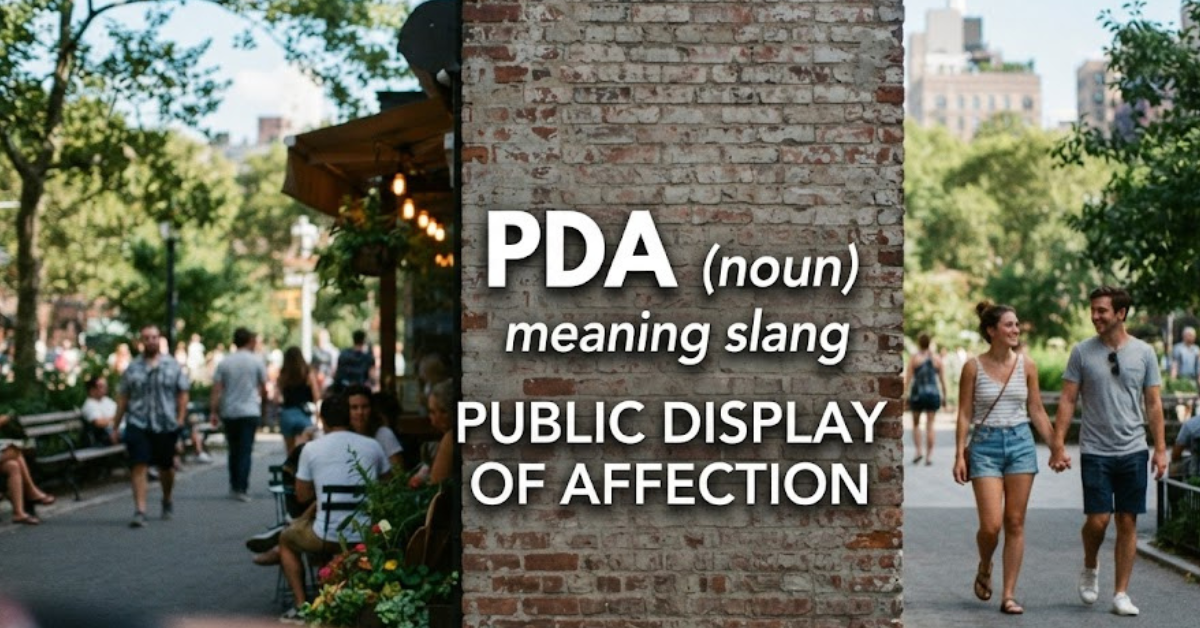
The PDA meaning slang is Public Display of Affection.
It refers to affectionate behavior between romantic partners that takes place in public or around other people.
PDA can include small gestures of love or more intimate actions, depending on the situation.
Common examples include:
- Holding hands
- Hugging
- Holding someone’s arm
- Putting an arm around a partner
- Kissing
- Cuddling
- Resting your head on a partner’s shoulder
When someone says, “That’s a lot of PDA,” they’re usually commenting on how openly a couple is expressing affection in public.
PDA Meaning Couple: What Does It Mean?
The PDA meaning couple simply refers to the ways romantic partners show affection when other people are present.
Every couple has a different comfort level.
Some enjoy:
- Walking hand in hand
- Giving quick hugs
- Sharing brief kisses
Others prefer to keep affectionate moments private.
Neither approach is inherently right or wrong—it often depends on personality, culture, and the environment.
PDA Meaning in Relationship
The PDA meaning in relationship goes beyond physical gestures. It reflects how comfortable partners are expressing affection publicly.
For many couples, appropriate PDA can:
- Show emotional connection
- Build intimacy
- Communicate affection
- Reinforce commitment
- Express happiness in the relationship
However, healthy relationships don’t require constant public affection. Every couple has unique boundaries.
PDA Meaning Relationship: Why It Matters
The PDA meaning relationship often relates to communication and mutual comfort.
Public affection can indicate closeness, but it shouldn’t become a measure of relationship quality.
A couple that rarely shows affection publicly may still have a loving, healthy relationship.
Likewise, frequent PDA doesn’t automatically mean a relationship is stronger.
What matters most is that both partners feel respected and comfortable.
Examples of PDA
Not all public displays of affection are the same.
They range from subtle to more noticeable.
Mild PDA
Generally accepted in many public settings:
- Holding hands
- Brief hugs
- Linking arms
- Holding someone’s waist
- A quick kiss on the cheek
- Sitting close together
Moderate PDA
These actions may be acceptable depending on the setting.
Examples include:
- Short kisses
- Cuddling on a park bench
- Resting a head on a partner’s shoulder
- Dancing closely
Intense PDA
Some forms of affection may make others uncomfortable in shared public spaces.
Examples include:
- Prolonged kissing
- Passionate embracing
- Excessively intimate touching
Whether these behaviors are acceptable depends heavily on local customs and social expectations.
Why Do Couples Show PDA?
There isn’t just one reason.
People express affection publicly for many different reasons.
Emotional Connection
Many couples naturally enjoy showing affection because it strengthens their bond.
Comfort
Some partners simply feel comfortable expressing love openly.
Celebration
Special occasions like engagements, anniversaries, or reunions often involve more public affection.
Habit
For some couples, holding hands or hugging becomes a natural part of everyday life.
Is PDA Always Romantic?
Most of the time, yes—but not always.
Some public displays of affection involve family members or close friends.
Examples include:
- Parents hugging children
- Friends greeting each other with hugs
- Siblings holding hands with younger children
However, when people use the abbreviation “PDA” in casual conversation, they almost always mean romantic affection between partners.
Cultural Differences in PDA
Attitudes toward public affection vary greatly around the world.
Countries Where PDA Is More Common
In many Western countries, behaviors such as:
- Holding hands
- Brief kisses
- Hugging
are widely accepted in public.
Countries With More Conservative Norms
In some cultures, public affection between romantic partners is discouraged or viewed as inappropriate.
Local customs, religious beliefs, and legal regulations may influence what’s considered acceptable.
For travelers, respecting local etiquette is always important.
Social Media and Modern PDA
Social media has changed how people think about relationships.
Today, PDA isn’t limited to physical affection in public.
Some people also use the term jokingly to describe:
- Constant couple selfies
- Romantic Instagram posts
- Frequent anniversary updates
- Public declarations of love online
While this isn’t the traditional definition, the expression has evolved with digital culture.
Is PDA Healthy in a Relationship?
In moderation, yes.
Healthy PDA can:
- Reinforce emotional closeness
- Increase feelings of security
- Show appreciation
- Strengthen emotional bonds
However, problems can arise if:
- One partner feels pressured.
- Affection is used to create jealousy.
- Public behavior ignores others’ comfort.
- Partners disagree about personal boundaries.
Communication remains the key.
How to Know If PDA Is Appropriate
Every situation is different.
Ask yourself:
- Is my partner comfortable?
- Is this appropriate for the location?
- Will this make others uncomfortable?
- Am I respecting cultural expectations?
A quick hug at the airport may feel perfectly natural.
The same behavior might not be appropriate during a formal business event.
Context matters.
Common Misconceptions About PDA
PDA Means Excessive Affection
Not necessarily.
Even holding hands is technically considered a public display of affection.
Couples Who Show PDA Love Each Other More
There’s no scientific evidence supporting this idea.
People express love differently.
Some are naturally affectionate in public, while others prefer privacy.
Avoiding PDA Means Relationship Problems
Not at all.
Many happy couples simply prefer keeping romantic moments private.
Relationship quality depends on communication, trust, and mutual respect—not public behavior.
Practical Tips for Couples
If you and your partner have different comfort levels, consider these suggestions:
- Talk openly about your preferences.
- Respect each other’s boundaries.
- Be mindful of cultural expectations.
- Adjust your behavior based on the setting.
- Focus on making both partners feel comfortable.
Healthy relationships involve compromise rather than pressure.
Key Takeaways
- The PDA meaning slang is Public Display of Affection.
- It describes affectionate behavior between romantic partners in public.
- PDA meaning couple includes actions like holding hands, hugging, and kissing.
- Public affection varies widely across cultures and personal preferences.
- Healthy relationships don’t depend on how much PDA a couple shows.
Frequently Asked Questions
What is the PDA meaning slang?
PDA stands for Public Display of Affection. It refers to affectionate behavior between romantic partners in public settings, such as holding hands, hugging, or kissing.
What is the PDA meaning in relationship?
The PDA meaning in relationship refers to how couples express affection when other people are present. Every relationship has different comfort levels regarding public affection.
What does PDA mean for couples?
The PDA meaning couple includes visible acts of affection like hand-holding, brief kisses, cuddling, or hugs. These gestures often reflect emotional closeness but vary based on personal preferences.
Is holding hands considered PDA?
Yes. Holding hands is one of the most common and socially accepted forms of public display of affection.
Is PDA appropriate everywhere?
No. Appropriate levels of PDA depend on cultural norms, local customs, and the setting. Behaviors accepted in one place may be considered inappropriate elsewhere.
Does more PDA mean a stronger relationship?
Not necessarily. Some couples naturally express affection in public, while others prefer privacy. The strength of a relationship depends on trust, communication, and mutual respect rather than public behavior.
Conclusion
Understanding the PDA meaning slang makes it easier to navigate modern conversations about dating, relationships, and social behavior. Whether you’re discussing PDA meaning in relationship, learning about PDA meaning couple, or simply wondering why people mention it online, the concept is straightforward: it’s about expressing affection in public.
Ultimately, there’s no universal rule for how much PDA is “right.” Every couple has different comfort levels, and cultural expectations can vary widely. The healthiest approach is one built on communication, respect, and consideration for both your partner and the people around you. When affection is genuine and appropriate for the situation, even small gestures can speak volumes.