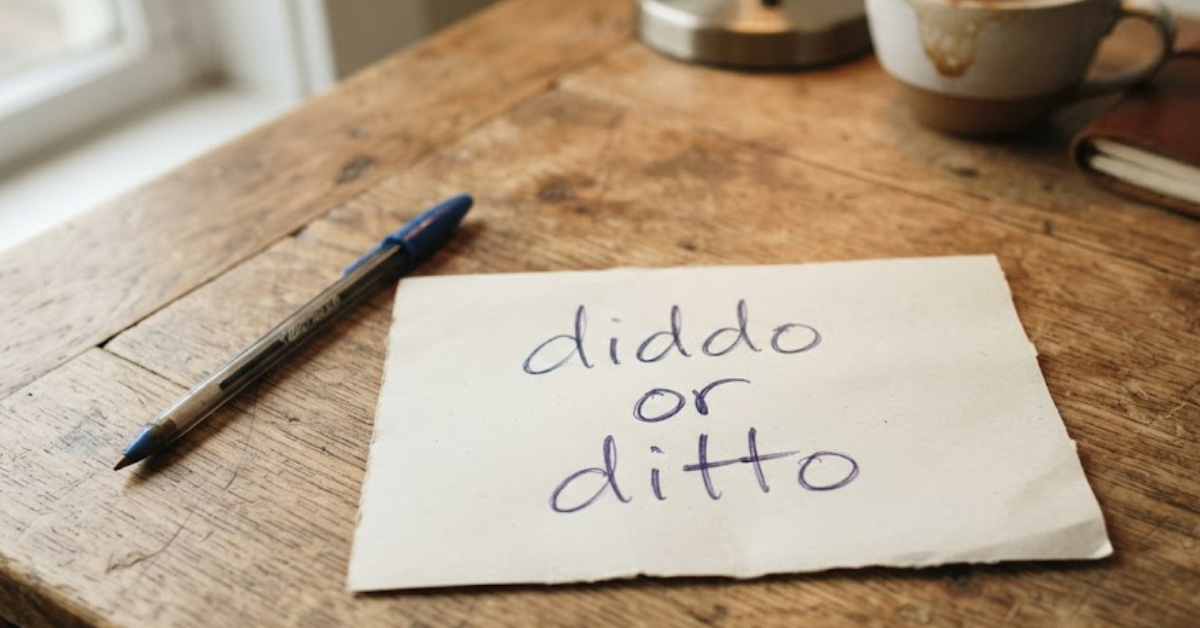
Have you ever replied “diddo” in a text message only to wonder later if you spelled it correctly? You’re certainly not the only one. Thousands of people search for diddo or ditto because the two words sound almost identical when spoken, making it easy to mix them up.
The good news is that the answer is simple. In standard English, only one spelling is considered correct. In this guide, we’ll explain the difference, explore the diddo meaning, discuss the history of “ditto,” and answer common questions like is it ditto or diddo so you can use the expression with confidence.
Diddo or Ditto: Which Spelling Is Correct?
The correct spelling is ditto.
“Diddo” is not recognized as a standard English word in major dictionaries. Instead, it is generally considered a common misspelling of “ditto” caused by pronunciation or typing mistakes.
Here’s a quick comparison:
| Word | Correct? | Meaning |
| Ditto | Yes | The same as previously stated; I agree |
| Diddo | No | Common misspelling of “ditto” |
If you’re writing an email, sending a text, or replying on social media, ditto is almost always the correct choice.
What Does Ditto Mean?
The word ditto means “the same,” “me too,” or “I agree.”
It’s used to avoid repeating something that has already been said or written.
For example:
Person A: “I love Italian food.”
Person B: “Ditto.”
This simply means:
“I love Italian food too.”
It’s a short, friendly way to express agreement without repeating the entire sentence.
Diddo Meaning: Is It a Real Word?
One of the most common online searches is diddo meaning.
In standard English, “diddo” does not have an accepted dictionary definition. Most of the time, people write “diddo” when they actually mean “ditto.”
Why does this happen?
- The words sound similar in casual speech.
- Autocorrect doesn’t always catch the mistake.
- Many people learn the word through conversation before seeing it written.
As a result, “diddo” has become a common spelling error rather than a separate English word.
The Origin of the Word “Ditto”
Understanding where the word comes from makes it easier to remember.
“Ditto” entered English through Italian. The Italian word detto means “said” or “already mentioned.”
English speakers eventually adopted “ditto” as a convenient way to indicate repetition instead of writing the same information again.
For many years, businesses even used ditto marks (” “) in ledgers and handwritten lists to indicate that an entry was identical to the one above.
Although computers have largely replaced handwritten records, the word remains popular in everyday conversation.
How to Use Ditto Correctly
The word is incredibly versatile.
1. Showing Agreement
This is its most common use.
Example:
Friend: “That was a fantastic movie.”
You: “Ditto.”
Meaning: “I agree.”
2. Saying “Me Too”
Example:
Coworker: “I’m ready for the weekend.”
You: “Ditto.”
Meaning: “I feel the same.”
3. Avoiding Repetition
In written lists, “ditto” historically replaced repeated information.
Example:
| Item | Color |
| Shirt | Blue |
| Hat | Ditto |
This means the hat is also blue.
Today, many official documents prefer repeating the information instead of using “ditto” to avoid confusion.
Why Do People Spell It “Diddo”?
Several factors contribute to the mistake.
Similar Pronunciation
In fast conversation, “ditto” may sound like “diddo,” especially in certain accents.
Learning by Ear
Many people hear the word long before they see it written, leading them to guess the spelling.
Typing Quickly
It’s easy to accidentally replace the “t” with a “d,” particularly on mobile keyboards.
Habit
If someone has always seen friends write “diddo” informally, they may assume it’s correct.
Is It Ditto or Diddo in Text Messages?
If you’re texting, the correct spelling is still ditto.
For example:
Friend: “Thanks for helping today.”
You: “Ditto!”
Meaning:
“You’re welcome—and thank you too.”
Texting doesn’t change the spelling, even though casual language often includes abbreviations and slang.
Common Examples of Ditto
Here are a few everyday examples.
Example 1
Person A: “Good luck on your exam.”
Person B: “Ditto!”
Example 2
Friend: “I’m exhausted after work.”
You: “Ditto.”
Example 3
Coworker: “I could use a vacation.”
You: “Ditto.”
Example 4
Sibling: “Mom makes the best cookies.”
You: “Ditto.”
In each case, the word replaces a longer sentence while keeping the conversation natural.
When Should You Avoid Using Ditto?
Although it’s useful, it isn’t appropriate in every situation.
Avoid using it in:
- Legal documents
- Academic writing
- Medical records
- Official government forms
- Technical reports
In formal writing, repeating the information clearly is usually better than relying on “ditto.”
Common Mistakes to Avoid
Many writers accidentally make these errors.
Diddo
Ditto
Dito
Ditto
Dittoe
Ditto
“Diddo means I agree.”
“Ditto means I agree.”
Using the correct spelling improves clarity and professionalism.
Tips for Remembering the Correct Spelling
If you often mix up the two spellings, these tricks can help:
- Remember that ditto has two “t”s.
- Think of the phrase “same thing”—both words contain repeated letters.
- Read books or articles where the word appears correctly.
- Let spell-check confirm the spelling before sending important messages.
With a little practice, the correct spelling quickly becomes second nature.
Key Takeaways
- Ditto is the correct English spelling.
- “Diddo” is generally a spelling mistake.
- The word means “the same,” “me too,” or “I agree.”
- It originated from Italian and has been used in English for centuries.
- It’s common in casual conversations but less suitable for formal writing.
Frequently Asked Questions
Is it ditto or diddo?
The correct spelling is ditto. “Diddo” is generally considered a misspelling rather than a separate English word.
What is the diddo meaning?
In standard English, “diddo” doesn’t have an official meaning. Most people who write it are intending to use the word “ditto.”
Can I use ditto instead of saying “me too”?
Yes. “Ditto” is a natural way to express agreement or indicate that you feel the same as someone else in casual conversation.
Is ditto formal or informal?
It’s mostly considered informal or conversational. While people understand it easily, formal writing usually benefits from more explicit wording.
Why do so many people spell it diddo?
The mistake often happens because the word is commonly heard in speech before it’s seen in writing. Similar pronunciation and quick typing also contribute to the confusion.
What are ditto marks?
Ditto marks (” “) are symbols traditionally used to indicate that the information is the same as the line above. Although less common today, they still appear in some handwritten notes and older documents.
Conclusion
The debate over diddo or ditto has a straightforward answer: ditto is the correct spelling in standard English. While “diddo” frequently appears in online searches and text messages, it is almost always a spelling mistake rather than a separate word with its own meaning.
Whether you’re expressing agreement, saying “me too,” or avoiding repetition, “ditto” is a simple and effective word that has stood the test of time. By remembering its correct spelling and understanding its history, you’ll communicate more clearly and confidently in both everyday conversations and written communication.