Finding unfamiliar software online can be exciting, especially when it promises easier internet access, better connectivity, or additional privacy. However, before downloading an application with an unfamiliar name, it is worth understanding what it does and whether it can be trusted.
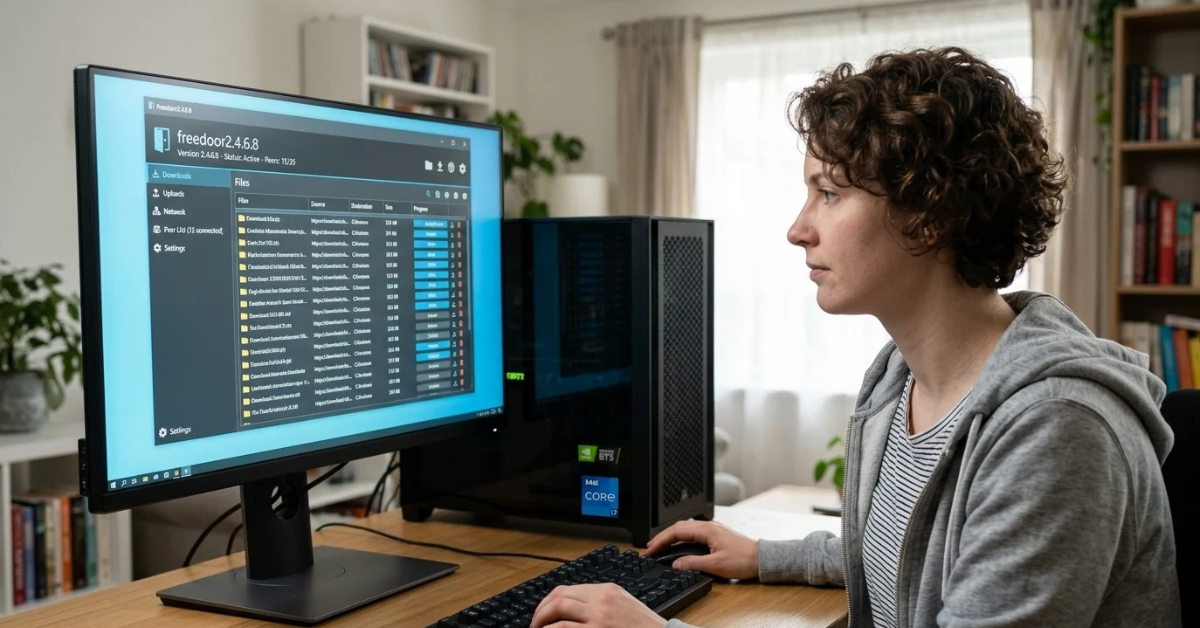
FreeDoor2.4.6.8 PC is a software name appearing in online searches and third-party download discussions. It is commonly associated with proxy-based networking, alternative internet routing, and network-access functionality. However, information about this particular version is limited, and its developer, official release history, and technical specifications are difficult to verify.
In this guide, we will explore what is known about the application, its reported functionality, Windows compatibility, installation considerations, potential security concerns, and alternatives worth considering.
What Is FreeDoor2.4.6.8 PC?
FreeDoor2.4.6.8 is a name used by several third-party websites to describe a networking or proxy-related Windows utility. Some descriptions associate it with alternative internet routing, while others suggest that it provides lightweight network-access functionality.
The important distinction is that these descriptions have not been consistently supported by authoritative documentation for the exact 2.4.6.8 release.
A software name and version number alone do not establish its authenticity. Before downloading it, users should identify the publisher, locate reliable documentation, and confirm that the available file genuinely belongs to the application.
Understanding Its Reported Purpose
Based on third-party descriptions, the application is associated with several networking concepts:
-
Proxy connections: Routing internet traffic through an intermediary server.
-
Alternative network routing: Using a different connection path to reach online resources.
-
Internet accessibility: Potentially helping users access resources affected by network restrictions.
-
Lightweight operation: Some websites describe it as a small application that does not require extensive system resources.
These are reported associations rather than independently verified features of this specific release.
Key Features and Capabilities
Although the exact features of this release remain unverified, understanding the networking functions associated with its online descriptions can help users evaluate the software.
1. Proxy-Based Internet Connections
A proxy server acts as an intermediary between a user’s computer and an online destination. Instead of connecting directly to a website, the user’s request passes through another server.
This approach can be useful for:
-
Managing how internet requests are routed.
-
Accessing network resources through an intermediary.
-
Testing website accessibility from different network environments.
-
Troubleshooting certain connection restrictions.
However, a proxy does not automatically encrypt all internet traffic or guarantee anonymity.
2. Lightweight Software Design
Some third-party descriptions characterize the application as lightweight software.
If a verified build has this design, it could be convenient for computers with limited processing resources. Nevertheless, there are no reliable published system benchmarks for the specific version.
3. Alternative Network Routing
Alternative routing is another function associated with this software name.
Network-routing utilities can help users investigate connectivity problems and access resources through different network paths. Actual performance depends on server availability, connection quality, network restrictions, and the software’s implementation.
4. Potential Portable Operation
Some online guides describe the application as portable software rather than a conventional Windows installation package.
Portable applications generally operate from an extracted folder or removable storage device. However, this operating method has not been confirmed for the exact release discussed here.
FreeDoor2.4.6.8 PC System Requirements
Before installing unfamiliar Windows software, it is important to understand whether your computer can support it.
Unfortunately, verified minimum and recommended system requirements for this particular release are not available.
The following table provides general considerations rather than official specifications.
| Component | What to check |
|---|---|
| Operating system | Confirm Windows compatibility |
| Processor | Check the application’s architecture |
| RAM | Review the publisher’s requirements |
| Storage | Ensure sufficient space for the package |
| Internet | Required for network-related functionality |
| Security | Updated antivirus and Windows protection |
Does It Work on Windows 10 and Windows 11?
There is insufficient reliable documentation to confirm compatibility with Windows 10 or Windows 11.
Older networking applications can sometimes encounter compatibility issues because modern Windows versions have different security policies, networking components, and application permissions.
Before attempting to run an unfamiliar executable, verify its supported operating systems and architecture.
How to Download and Install FreeDoor2.4.6.8 on PC
One of the biggest challenges when searching for this application is identifying a trustworthy download.
At the time of writing, I could not verify an official publisher website or an authenticated download for version 2.4.6.8. Therefore, I would not recommend downloading an executable from an unknown website.
If you locate a package that claims to be an authentic release, follow these precautions.
Step 1: Identify the Software Publisher
Look for:
-
The developer’s name.
-
An official product website.
-
Release documentation.
-
A privacy policy or licensing information.
-
A support contact.
If these details are missing, consider that a warning sign.
Step 2: Verify the Downloaded File
Before opening the executable:
-
Check its filename and file extension.
-
Open its Properties window.
-
Look for publisher and digital signature information.
-
Check whether the signature is valid.
-
Compare its SHA-256 hash with a publisher-provided checksum, if available.
A matching checksum helps establish file integrity, but it does not independently prove that the original file is trustworthy.
Step 3: Scan the File
Windows includes Microsoft Defender, which can scan individual files and folders.
To scan a downloaded package:
-
Open File Explorer.
-
Find the downloaded file.
-
Right-click it.
-
Select Scan with Microsoft Defender.
-
Review the scan results before proceeding.
Microsoft provides instructions for scanning individual files through Windows Security.
Microsoft Support+1
Step 4: Review Installation Permissions
If the package contains a setup wizard, carefully review its installation options.
Pay particular attention to:
-
Administrator permissions.
-
Additional bundled applications.
-
Browser configuration changes.
-
Proxy and network settings.
-
Startup applications and background processes.
Never disable antivirus protection simply to force an unidentified program to run.
Step 5: Test the Application Carefully
Only after establishing the software’s authenticity should you consider running it.
For network-related applications, observe whether they change your connection settings, introduce unexpected background processes, or request permissions that are unrelated to their stated purpose.
Is FreeDoor2.4.6.8 Safe to Use?
Software safety is an important consideration, particularly when an application interacts with internet connections.
There is currently insufficient authoritative information to confirm that every file distributed under this name is legitimate or safe.
This does not mean the software is necessarily malicious. It means that users should not assume that a download is trustworthy simply because it has a recognizable name and version number.
Potential Security Concerns
Here are some issues worth considering before using an unidentified networking utility.
1. Unverified executable files
A third-party website may distribute a modified application, an unrelated executable, or a package containing additional software.
2. Network privacy
If an application routes internet traffic through proxy servers, the operator of those servers may have visibility into certain connection information. HTTPS protects the contents of properly encrypted connections, but it does not make every aspect of browsing private.
3. Unnecessary permissions
A networking application may require certain permissions, but requests for unrelated access should be investigated.
4. Outdated software
Older applications may contain vulnerabilities or compatibility problems that have not been addressed through security updates.
How to Protect Your Computer
Follow these basic precautions:
-
Keep Windows and Microsoft Defender updated.
-
Avoid unofficial download mirrors.
-
Check digital signatures whenever available.
-
Never share sensitive credentials with an unfamiliar application.
-
Monitor unexpected changes to proxy settings.
-
Remove software that behaves suspiciously.
-
Run a full security scan if you suspect an infection.
Microsoft Defender SmartScreen also evaluates downloaded applications using publisher and file reputation signals. An unfamiliar-file warning does not automatically prove malware, but it should not be ignored.
Microsoft Learn+1
FreeDoor vs. Freegate: Understanding the Difference
An interesting complication when researching this application is the existence of another similarly named networking product: Freegate.
Freegate is developed by Dynamic Internet Technology (DIT) and is officially documented as an anti-censorship application for Windows.
DIT describes Freegate as a single executable that does not require conventional installation. Its DynaWeb distribution has also listed Windows client releases.
However, the official documentation identifies the product as Freegate, not FreeDoor2.4.6.8. The two names should not be treated as interchangeable without evidence establishing their relationship.
There is also a separate project called FreeDoor on SourceForge. It is described as a 32-bit BBS Door Development Kit for Windows and OS/2, with its listed project status inactive and last update dated May 8, 2014.
SourceForge+1
This is why identifying the exact application matters before downloading anything.
Alternatives Worth Considering
If your primary goal is secure internet access, network troubleshooting, or privacy, several established options are worth exploring.
These are alternatives for different purposes, not verified replacements for the unidentified software.
1. Freegate
Website: DynaWeb
Freegate is worth investigating if you are specifically looking for Windows anti-censorship software. Its publisher provides identifiable product documentation and distribution information.
2. Proton VPN
Website: Proton VPN
Proton VPN provides encrypted VPN connections and applications for desktop operating systems. It is an option for users who prioritize connection privacy and security.
3. Cloudflare WARP
Website: Cloudflare WARP
Cloudflare WARP offers an alternative way to route and protect internet traffic. It is designed to improve connection privacy and security, rather than function as a traditional anonymous proxy.
4. Tor Browser
Website: Tor Project
Tor Browser routes browsing traffic through the Tor network, providing a different approach to online privacy and censorship resistance. It is particularly useful for users who want privacy-focused web browsing.
Common Problems and Troubleshooting
Users researching older or unidentified Windows applications may encounter several common problems.
1. Windows Cannot Open the File
Possible reasons include:
-
An incomplete download.
-
An unsupported executable format.
-
A corrupted package.
-
Operating-system compatibility issues.
-
Windows security restrictions.
Check the file’s source and integrity before attempting to open it.
2. The Application Cannot Connect to the Internet
For a verified networking application, connection problems may be related to:
-
Firewall restrictions.
-
Incorrect proxy settings.
-
Unavailable network servers.
-
Internet connectivity issues.
-
Outdated software components.
Do not change firewall or security settings without understanding why the application requires those changes.
3. Unexpected Browser Behavior
If your browser starts using an unfamiliar proxy or displays unexpected redirects, review its connection settings.
Windows users can check:
-
Open Settings.
-
Navigate to Network & Internet.
-
Select Proxy.
-
Review the manually configured proxy settings.
-
Disable settings that you cannot identify or trust.
If suspicious software has been installed, uninstall it and run a full security scan.
Frequently Asked Questions (FAQs)
1. What is FreeDoor2.4.6.8 PC?
It is a software name appearing on third-party websites, generally associated with proxy-based networking and alternative internet routing. However, its exact identity and official functionality remain unverified.
2. Is FreeDoor2.4.6.8 available for Windows?
Third-party websites describe it as Windows-oriented software, but an authenticated Windows release for this exact version has not been established.
3. Is FreeDoor2.4.6.8 free to download?
Some websites describe it as free software. However, its official licensing terms and legitimate distribution source could not be verified.
4. Is FreeDoor2.4.6.8 safe?
There is insufficient reliable evidence to confirm its safety. Users should verify the publisher, inspect the digital signature, and scan the downloaded file before running it.
5. Does FreeDoor2.4.6.8 work on Windows 11?
Official Windows 11 compatibility information is unavailable. Compatibility should be confirmed with the actual software publisher.
6. Can I use FreeDoor2.4.6.8 on a Mac?
There is no reliable documentation confirming a native macOS release. Do not assume that a Windows executable will work on macOS.
7. Is FreeDoor the same as Freegate?
They should not automatically be considered the same application. Freegate is an officially documented product from Dynamic Internet Technology, whereas the exact identity of the software labeled FreeDoor2.4.6.8 remains uncertain.
8. Can FreeDoor2.4.6.8 hide my IP address?
Some third-party descriptions associate the name with proxy functionality. However, there is no verified technical documentation establishing its IP-routing behavior or privacy protections.
9. What should I do if Windows Defender blocks the application?
Do not immediately bypass the warning. Verify the publisher, check the file signature, and investigate the detection. If the source cannot be established, avoid running the application.
10. What are the best alternatives?
Depending on your requirements, consider Freegate for anti-censorship access, Proton VPN for encrypted VPN connections, Cloudflare WARP for alternative network routing, or Tor Browser for privacy-focused browsing.
Conclusion
FreeDoor2.4.6.8 PC is an interesting search term for people exploring older networking and proxy-related applications. However, finding reliable information about this exact release is challenging because its publisher, official download source, technical specifications, and actual capabilities remain unclear.
The most important takeaway is to verify the software before installing it. A familiar-looking name, version number, or download button does not guarantee authenticity.
If you are looking for a reliable networking solution, consider established alternatives with identifiable developers, transparent documentation, and regular security updates.
Ultimately, when it comes to downloading unfamiliar PC software, security and authenticity should always come before convenience.